
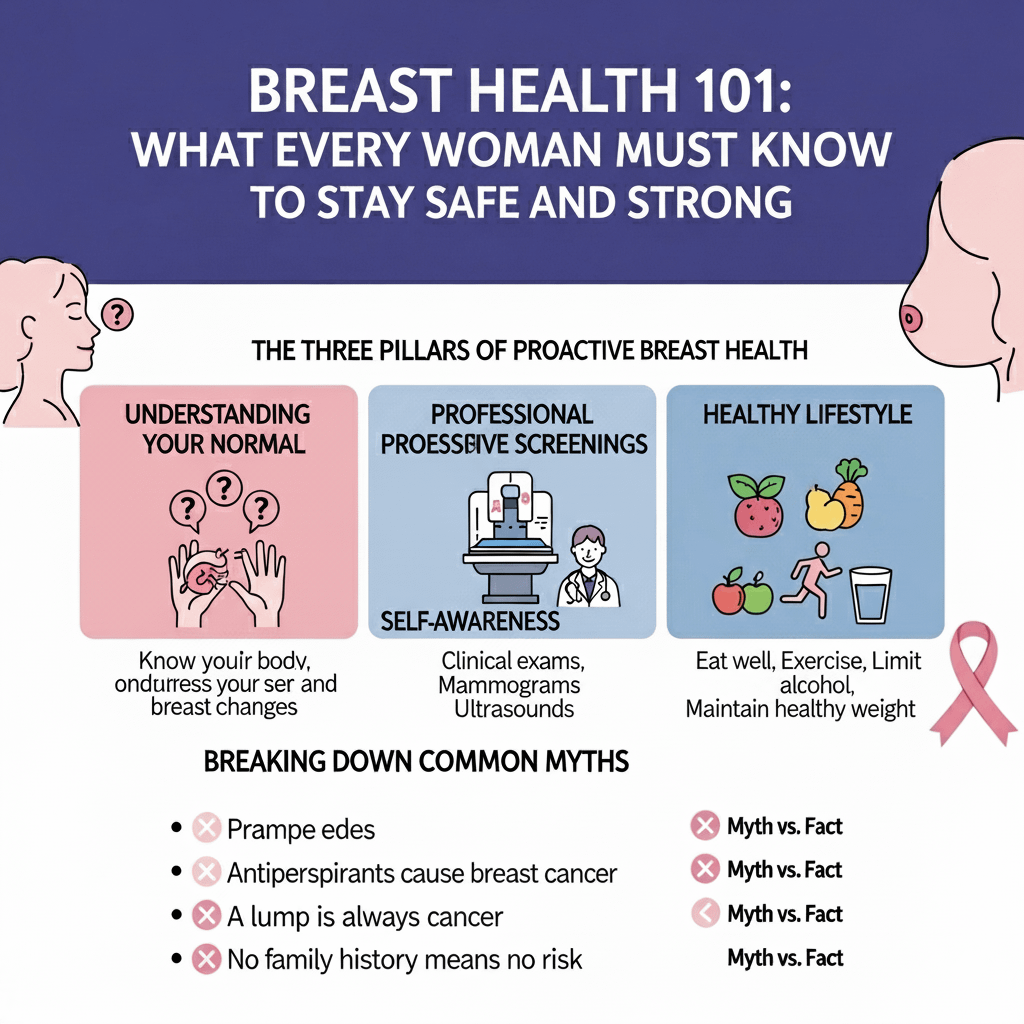
Breast health is a crucial aspect of every woman’s overall well-being, yet it’s a topic that often feels overwhelming. Understanding the fundamentals isn’t about dwelling on fear, but about empowerment—equipping yourself with the knowledge to be proactive, make informed choices, and feel confident in your body. This guide serves as your starting point, covering the essential actions and information you need to prioritize your breast health throughout your lifetime.
The Foundation: Understanding Your “Normal”
A healthy relationship with your body begins with knowing what is normal for you. Breasts are not static; they change throughout your life due to hormonal shifts, pregnancy, and aging. Understanding these normal changes is key to recognizing when something might be amiss. For example, it’s common for breasts to feel tender or lumpy before your period, and their density can change as you get older. By being aware of your body’s typical cycles and textures, you can more easily spot anything unusual and take steps to maintain good breast health.
The Three Pillars of Proactive Breast Health
Prioritizing your breast health involves a multi-faceted approach. Think of it as a three-pillar strategy: self-awareness, professional screenings, and a healthy lifestyle. This comprehensive approach is essential for optimal breast health.
Pillar 1: Self-Awareness and Breast Health Self-Exams
The most powerful tool you have for breast health is your own knowledge. While doctors no longer universally recommend formal breast self-exams (BSEs) as the primary screening tool, a consistent habit of being “breast aware” is invaluable. This means routinely paying attention to how your breasts look and feel. You can do this by standing in front of a mirror with your arms at your sides and looking for any changes in size, shape, or color. Check for any dimpling, puckering, or rash. Then, raise your arms over your head and repeat the visual check.

You should also use the pads of your fingers to feel your entire breast in a circular pattern, from your collarbone to the top of your stomach, and from your armpit to your breastbone. Pay attention to any new lumps, thickening, pain, or unusual discharge. If you notice any of these, don’t panic—most lumps are benign—but do make an appointment with your doctor promptly to discuss your breast health concerns.
Pillar 2: Professional Screenings—The Lifesaving Routine
Professional screenings are a cornerstone of modern breast health care, as they can detect changes long before they are felt. These screenings include a clinical breast exam (CBE), which is a thorough physical examination of your breasts performed by a healthcare professional, typically as part of your annual check-up.
Mammograms, an X-ray of the breast, are the gold standard for the early detection of breast cancer. The American Cancer Society recommends annual mammograms for women aged 45 and older. Discuss with your doctor about your breast health when you should start and how often you should have one, as recommendations can vary based on individual risk factors. In some cases, supplementary tools like ultrasounds or MRIs may be used, especially for women with dense breast tissue or those at high risk. These professional screenings are a vital part of a complete breast health strategy.
Pillar 3: Lifestyle—Powering Your Breast Health
What you do every day has a profound impact on your long-term breast health. A proactive lifestyle can significantly reduce your risk. This involves a healthy diet, focusing on foods rich in fruits, vegetables, and whole grains while limiting processed foods, sugar, and alcohol. Maintaining a healthy weight through diet and regular exercise is another crucial factor, as obesity, especially post-menopause, is a significant risk factor for breast cancer. Regular physical activity has been proven to lower breast cancer risk, so aim for a consistent routine of at least 150 minutes of moderate-intensity exercise per week. Limiting alcohol consumption is also wise, as studies have shown a clear link between alcohol and an increased risk of breast cancer. All of these choices contribute positively to your breast health.
Breaking Down Common Myths
A lot of misinformation surrounds breast health. It’s important to set the record straight on a few common myths. For instance, there is no credible scientific evidence that antiperspirants cause breast cancer. It’s also a myth that a lump is always cancer; the vast majority of breast lumps are benign. And contrary to popular belief, most women who are diagnosed with breast cancer do not have a family history, even though a family history can increase your risk. Debunking these myths is part of good breast health awareness.
In conclusion, taking control of your breast health is a holistic commitment to self-care that includes awareness, professional guidance, and healthy habits. By arming yourself with knowledge and making these practices a part of your routine, you are taking the most powerful steps to stay safe and maintain strong breast health.
