
When it comes to proactive breast health, one of the most empowering tools you have is breast self-examination. This simple yet crucial practice enables you to become familiar with the normal appearance and texture of your breasts, making it easier to notice any changes that may require a doctor’s attention. This guide is designed to provide you with a comprehensive, step-by-step approach to breast self-examination, helping you make it a regular and confident part of your health routine.
What is Breast Self-Examination?
Breast self-examination (BSE) is the process of a woman examining her own breasts to look for any lumps, changes in size or shape, or other abnormalities. It is a critical component of a proactive approach to breast health, alongside clinical breast exams and mammograms. The goal of breast self-examination isn’t to replace professional screenings but to supplement them by fostering a deeper awareness of your own body. This regular practice can help in the early detection of breast cancer by identifying subtle changes that you might otherwise miss. Consistent breast self-examination is a powerful habit.
When to Perform a Breast Self-Examination
Timing is key for effective breast self-examination. The best time to perform your breast self-examination is a few days after your menstrual period ends. This is when your breasts are typically the least swollen and tender, making it easier to feel for any changes. If you are post-menopausal, pregnant, or have had a hysterectomy, you can choose a specific day each month—such as the first of the month—to perform your breast self-examination to ensure consistency. Making it a monthly habit is the most important part of breast self-examination.
Step-by-Step Guide to Breast Self-Examination
This section will guide you through the three main parts of a proper self-breast examination: looking, feeling while standing, and feeling while lying down.
Step 1: In Front of a Mirror (Looking)
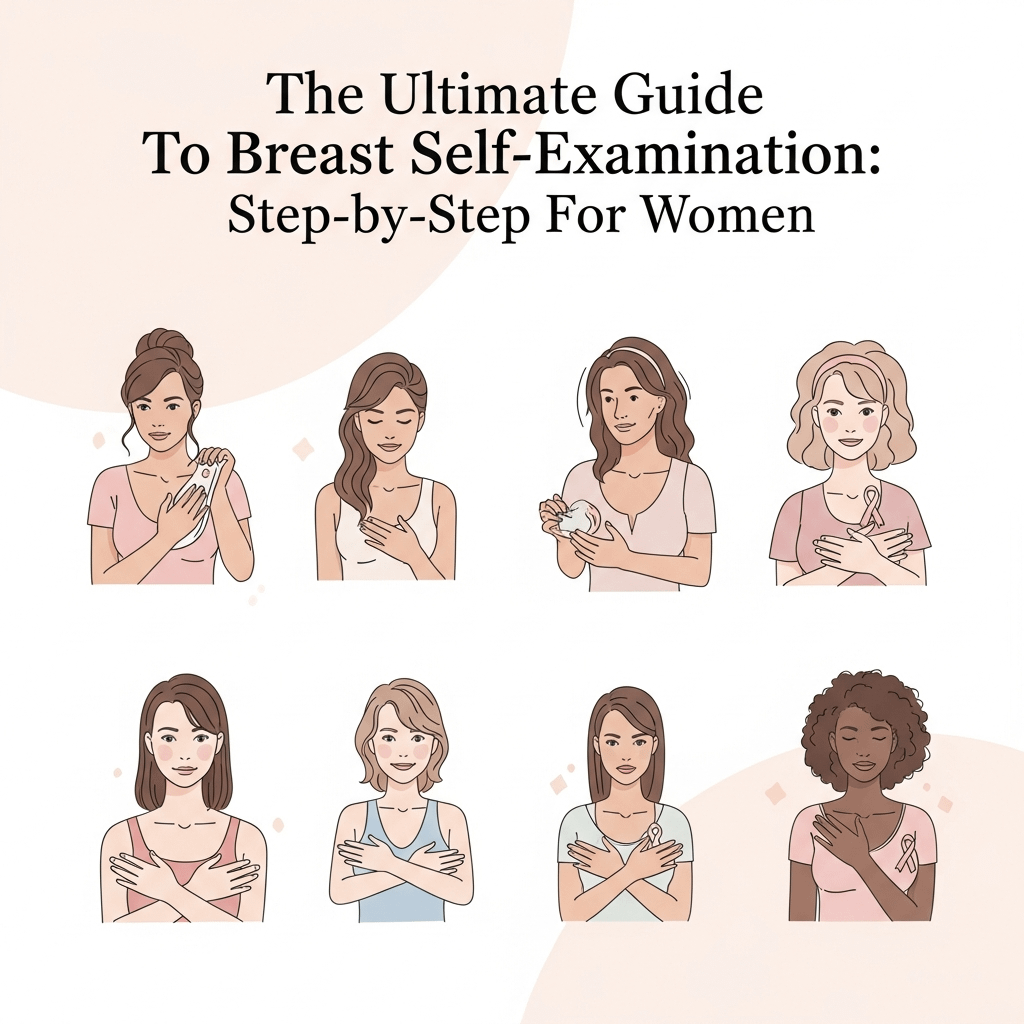
Begin your breast examination by standing in front of a mirror with your hands on your hips. Carefully observe your breasts for any changes in size, shape, or color. Look for any dimpling, puckering, or bulging of the skin. Check for any changes to the nipples, such as a nipple that has turned inward or is producing discharge. Repeat this observation with your arms raised over your head. This visual inspection is a crucial first step in self-breast examination.
Step 2: In the Shower (Feeling While Standing)
The slippery skin in the shower can make it easier to feel for lumps. Using the pads of your three middle fingers, press firmly on your breast with a circular motion. Use your right hand to examine your left breast and your left hand to examine your right breast. This part of breast self-examination should cover the entire breast, from your collarbone down to the top of your abdomen, and from your armpit to the middle of your chest. Make sure to feel deeply for any lumps or knots. This thorough method is key to a complete breast self-examination.
Step 3: Lying Down (Feeling While Lying Down)
For the final part of your breast self-examination, lie down on your back. Place a pillow under your right shoulder and put your right arm behind your head. Using the pads of your three middle fingers on your left hand, gently but firmly press on your right breast in small circular motions. Start at the outermost part of the breast and move inward, covering the entire area. Repeat this process for the left breast. The purpose of this step is to ensure that the entire breast area is checked, which is fundamental to a comprehensive breast self-examination.
What to Look and Feel For During a Breast Self-Examination
During your breast examination, you should be aware of several potential signs of concern. These include, but are not limited to, a new lump or thickening in or near the breast or underarm, a change in the size or shape of the breast, skin dimpling or puckering, nipple changes (such as a nipple turning inward or discharge), and a rash or swelling on the breast. It is important to remember that most lumps found during breast examination are not cancerous, but any new change should be checked by a doctor. Being proactive with self-breast examination means taking these changes seriously.
Why Breast Self-Examination Matters
Consistent breast self-examination is a vital part of your overall health strategy. It empowers you with the knowledge of what is normal for your body, which can help you detect changes earlier. While it’s not a substitute for professional screenings like mammograms, it serves as an excellent complement. By practicing breast self-examination regularly, you are taking a proactive stance on your health, giving yourself the best possible chance for a positive outcome if any issues arise. Regular self-breast examination is about being an informed and active participant in your healthcare.