
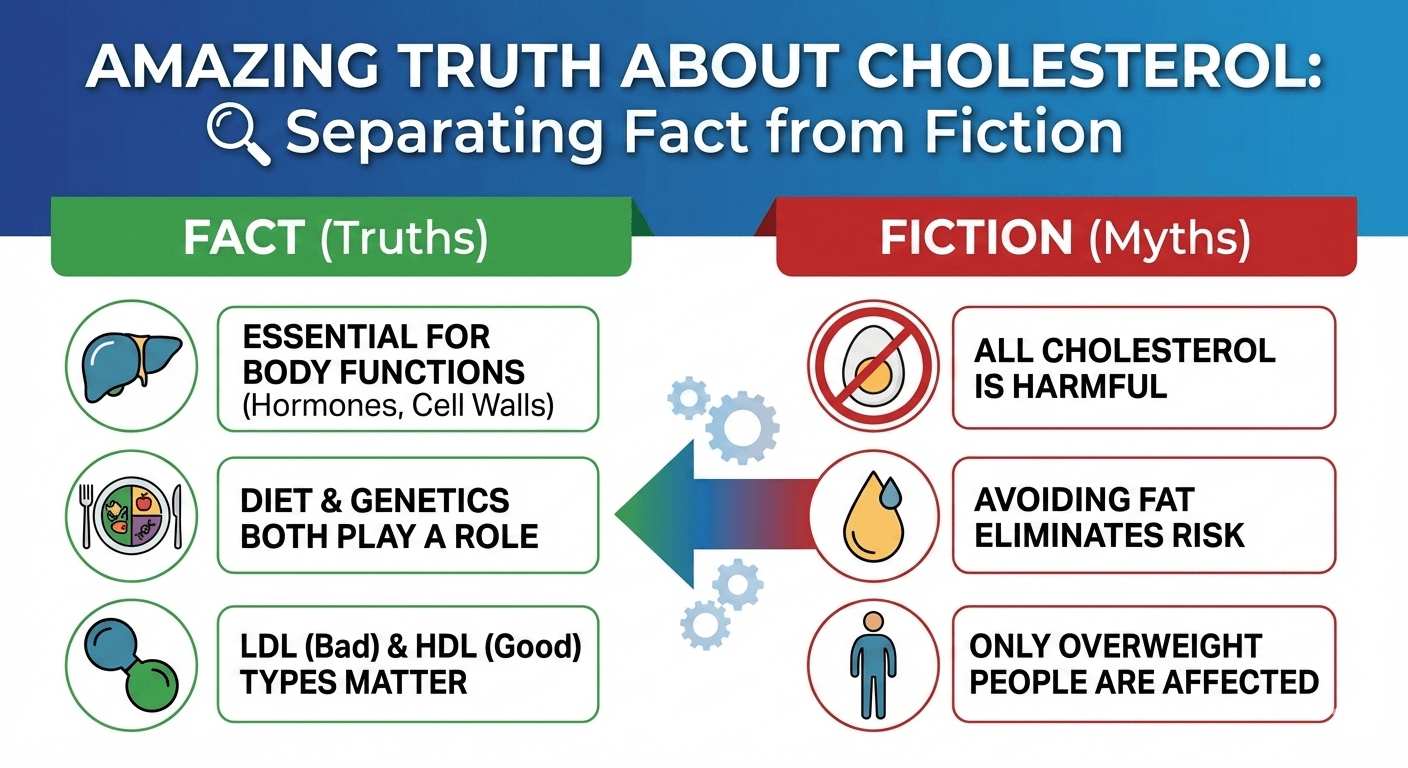
When it comes to heart health, cholesterol often takes center stage—usually painted as the villain. But is it really the enemy we’ve been led to believe? The amazing truth about cholesterol is that it’s far more complex than the myths we’ve heard. To protect your heart, it’s time to separate fact from fiction and understand how it actually works in your body.
What Is Cholesterol Really?
Contrary to common belief, cholesterol isn’t a harmful substance floating around just waiting to clog your arteries. It’s a waxy, fat-like compound that plays an essential role in your body. Found in every cell, it helps build membranes, produce hormones like estrogen and testosterone, and even create vitamin D. Without it, your body couldn’t function properly.
Your liver naturally produces most of what you need. The rest comes from foods such as meat, dairy, and eggs. This balance highlights an important truth—cholesterol itself isn’t inherently bad. Problems arise when there’s too much of the wrong type in your bloodstream.
The Good and the Bad: HDL vs. LDL
You’ve probably heard about “good” and “bad” cholesterol, but what do those terms actually mean?
- HDL (High-Density Lipoprotein): Often referred to as the “good” form, HDL helps remove excess cholesterol from the blood, carrying it back to the liver for processing. Higher levels of HDL cholesterol are associated with a reduced risk of heart disease.
- LDL (Low-Density Lipoprotein): Known as “bad” cholesterol, LDL can build up as plaque in your arteries, narrowing them and increasing the risk of heart attack and stroke.
- Here’s the truth: your body needs both HDL and LDL. The issue arises when LDL is too high or HDL is too low.
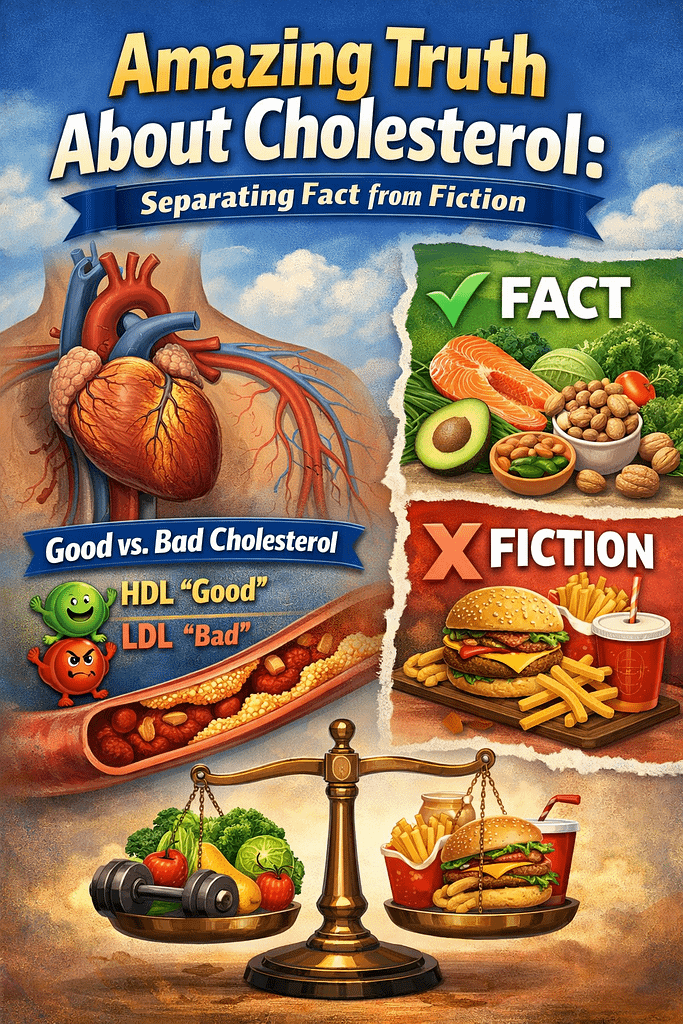
Cholesterol Myths You Should Stop Believing
1. Myth: All cholesterol is dangerous.
Fact: Your body can’t survive without it. The key lies in balance.
2. Myth: Eating eggs will raise your cholesterol dangerously.
Fact: While eggs contain cholesterol, research shows dietary intake has less effect on blood levels than once believed.
3. Myth: Only older people need to worry.
Fact: High levels can affect anyone, including young adults. Early lifestyle choices matter.
4. Myth: If you feel fine, your cholesterol must be normal.
Fact: High levels have no symptoms. The only way to know is through blood tests.
Lifestyle Habits That Support Healthy Levels
The good news is that you have a lot of control. Here are science-backed habits to keep your heart strong:
- Eat a balanced diet: Fiber-rich foods like fruits, vegetables, and whole grains help lower LDL.
- Limit saturated fats: Found in red meat and full-fat dairy, these fats can raise LDL.
- Choose healthy fats: Olive oil, avocados, and nuts support good HDL.
- Exercise regularly: Physical activity boosts HDL and lowers LDL.
- Quit smoking: Smoking lowers HDL and damages blood vessels, making the buildup worse.
- Maintain a healthy weight: Even modest weight loss can improve your profile.
Medical Management and Testing
Sometimes lifestyle changes aren’t enough. For people with very high LDL or a strong family history of heart disease, doctors may recommend medications like statins. These lower LDL levels reduce the risk of complications. Regardless of your health status, routine testing is vital. A simple blood test called a lipid panel measures total cholesterol, HDL, LDL, and triglycerides. Regular check-ups help spot problems before they become serious.
The Bottom Line
The amazing truth about cholesterol is that it’s not your enemy—it’s an essential part of your body. The real challenge is maintaining a balance between LDL and HDL to protect your heart. By understanding the facts, ignoring the myths, and adopting heart-healthy habits, you can keep the levels in check and significantly reduce your risk of heart disease. Instead of fearing it, learn to manage it wisely. With the right lifestyle choices and regular monitoring, you can separate fact from fiction and give your heart the best chance at lifelong health.
