
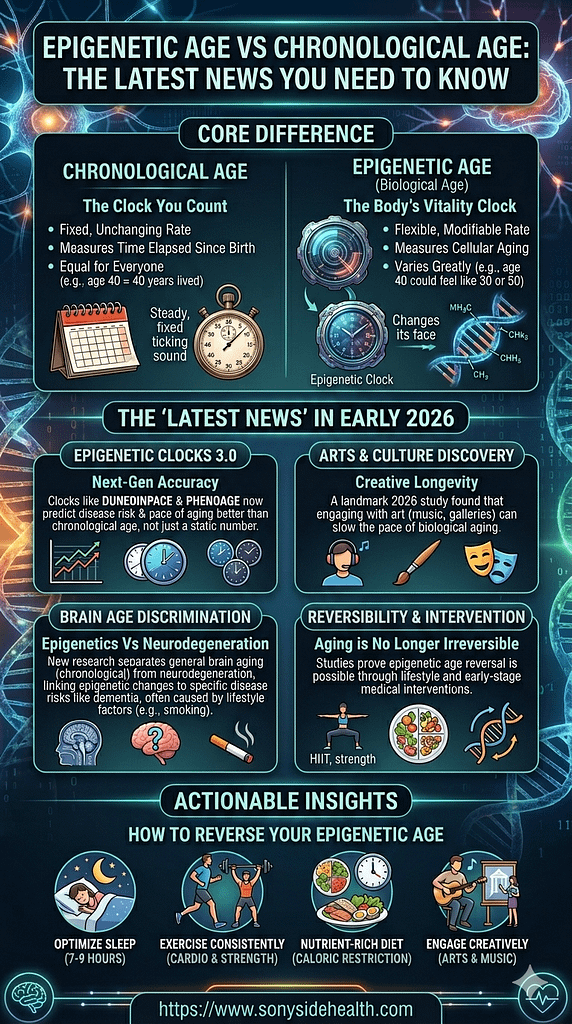
Understanding the distinction between epigenetic age and chronological age is pivotal in longevity science. While chronological age simply counts the years lived, epigenetic age reflects the biological health of cells, determined by DNA methylation patterns influenced by lifestyle and environment. Recent advancements reveal that individuals with a biological age greater than their chronological age face increased health risks. Epigenetic clocks have been created to measure this biological age and can predict mortality and disease onset. Factors such as lifestyle choices and environmental exposures significantly impact epigenetic age. Exciting research indicates that lifestyle modifications can reverse epigenetic aging, prompting healthcare providers to incorporate epigenetic testing into preventive medicine. This emerging field suggests that with informed interventions, individuals can influence their biological aging process for improved health and longevity.