
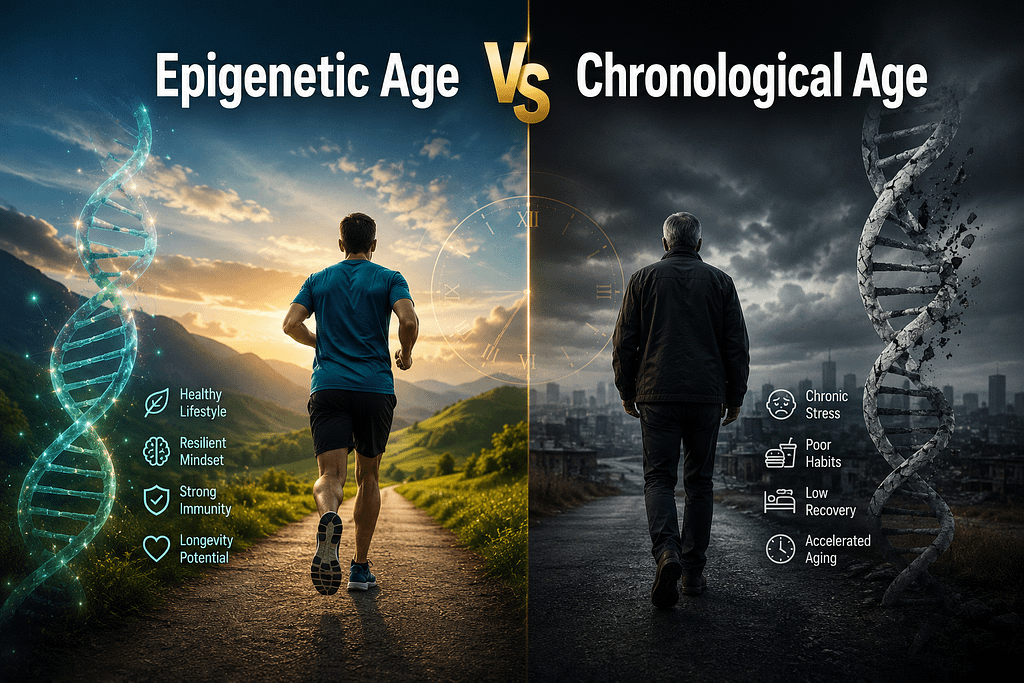
Understanding epigenetic age vs chronological age has become one of the most groundbreaking developments in longevity science. While your birth certificate tells one story about how old you are, your cells might be telling a completely different tale. Recent advances in biological aging research are revolutionizing how we think about health, disease prevention, and the aging process itself.
What Makes Epigenetic Age Different?
Your chronological age is straightforward—it’s simply the number of years you’ve been alive. However, epigenetic age measures something far more revealing: the biological condition of your cells and tissues. This measurement of epigenetic age is determined by analyzing chemical modifications to your DNA called methylation patterns, which change as we age and are influenced by lifestyle, environment, and genetics.
The distinction between epigenetic age and chronological age matters because two people born on the same day can have vastly different biological ages. One might have the cellular health of someone ten years younger, while another could be aging faster than their years suggest. This gap between biological and chronological aging can predict health outcomes, disease risk, and even lifespan more accurately than simply counting birthdays.
The Science Behind Epigenetic Clocks
Scientists have developed sophisticated tools called epigenetic clocks that measure biological age by examining DNA methylation at specific sites across the genome. The most well-known clocks include the Horvath clock, Hannum clock, and the newer GrimAge and PhenoAge clocks. These tools analyze hundreds of methylation markers to generate a biological age estimate.
Recent research published in leading journals has shown that epigenetic clocks can predict mortality risk, onset of age-related diseases, and cognitive decline with remarkable accuracy. When examining epigenetic age vs chronological age, researchers found that people whose biological age exceeds their chronological age face higher risks of cardiovascular disease, cancer, Alzheimer’s disease, and premature death.
Factors That Influence the Gap
What causes someone’s epigenetic age to diverge from their chronological years? The answer lies in a complex interplay of controllable and uncontrollable factors. Lifestyle choices play a massive role in epigenetic age—chronic stress, poor sleep quality, unhealthy diet, lack of exercise, and smoking can all accelerate epigenetic aging. Conversely, regular physical activity, Mediterranean-style diets, stress management, and adequate sleep appear to slow biological aging.
Environmental exposures also matter significantly in epigenetic age. Air pollution, chronic inflammation, and exposure to toxins can speed up cellular aging. Even socioeconomic factors influence the relationship between epigenetic age vs chronological age, with studies showing that financial stress and limited access to healthcare can accelerate biological aging independent of other risk factors.
The Latest Breakthrough Research
Recent studies have delivered exciting news about reversing epigenetic age. In 2024, researchers demonstrated that specific interventions could actually turn back the epigenetic clock. One clinical trial showed that a combination of diet modification, exercise, sleep optimization, and relaxation techniques reduced participants’ biological age by more than three years in just eight weeks.
Even more remarkably, studies on time-restricted eating, certain supplements like NAD+ precursors, and emerging therapies such as senolytics (drugs that clear senescent cells) have shown promise in narrowing the gap between biological and chronological age. The understanding of epigenetic age vs chronological age has shifted from purely diagnostic to potentially therapeutic.
Why This Matters for Your Health
The practical implications of understanding epigenetic aging are profound. Unlike chronological age, which marches forward relentlessly, biological age can potentially be modified. This means you’re not necessarily destined to experience age-related decline at any particular pace. By measuring your epigenetic age, you can get actionable feedback on how your lifestyle choices are affecting your cellular health.
Healthcare providers are beginning to incorporate epigenetic age testing into preventive medicine. Rather than waiting for disease symptoms to appear, doctors can identify accelerated aging patterns early and intervene with targeted lifestyle modifications or medical treatments. This proactive approach represents a fundamental shift in how we think about aging and disease prevention.
Testing Your Own Biological Age
Commercial epigenetic age tests have become increasingly available and affordable. Companies now offer at-home testing kits that analyze your DNA methylation patterns from a simple saliva or blood sample. While these tests aren’t yet standardized across the industry, they provide valuable insights into your biological aging trajectory.
When interpreting results comparing epigenetic age vs chronological age, remember that a single test is just a snapshot. The real value comes from tracking changes over time and understanding how lifestyle interventions affect your biological age. Many people use these tests as motivation to adopt healthier habits and measure the effectiveness of their efforts.
The Future of Aging Science
The field of epigenetic aging research is advancing rapidly, with discoveries emerging regularly. Scientists are developing more precise clocks, identifying novel interventions, and exploring how epigenetic modifications could be targeted therapeutically. The goal isn’t just extending lifespan but improving healthspan—the years we live in good health.
Understanding epigenetic age vs chronological age empowers you to take control of your aging process. While you can’t stop chronological time, you can influence your biological age through informed lifestyle choices. The latest research suggests that with the right interventions, we might be able to maintain youthful cellular function far longer than previous generations imagined possible.
The message is clear: your age isn’t just a number on your driver’s license—it’s a dynamic biological process you can potentially influence for better health and longevity.