
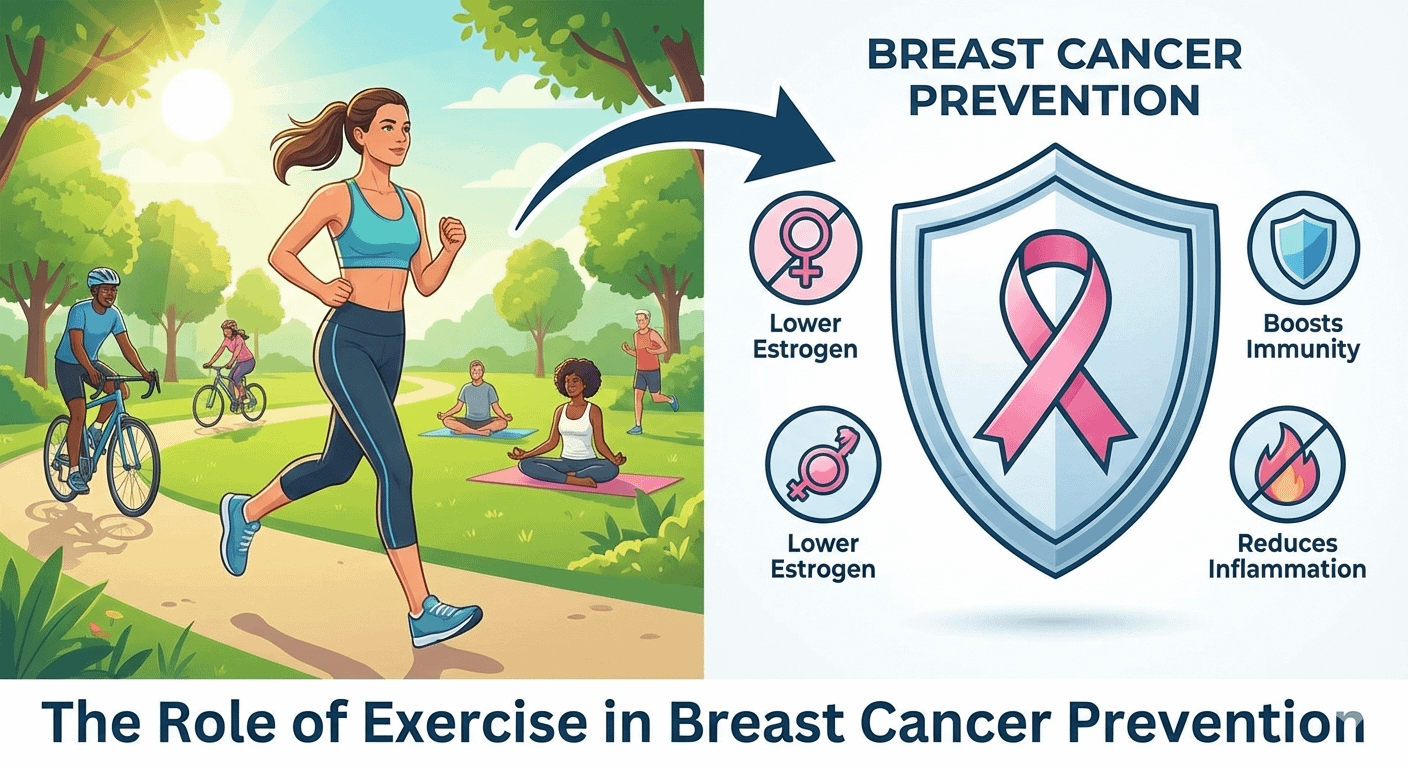
When it comes to breast cancer prevention, many people focus on diet and genetics. However, one of the most powerful and accessible tools for breast cancer prevention is regular physical activity. The truth is, exercise is a significant and scientifically proven strategy for reducing your risk. This article explores the profound connection between exercise and breast cancer prevention, examining the underlying mechanisms and offering practical guidance on incorporating this vital habit into your daily life. The role of exercise in breast cancer prevention is a topic that deserves more attention.
The Scientific Link Between Exercise and Breast Cancer Prevention
A growing body of research confirms that regular exercise can significantly lower the risk of developing breast cancer. This link isn’t a myth; it’s a truth backed by numerous studies on breast cancer prevention. While the exact percentage of risk reduction can vary, many studies show a decrease of 10% to 30% in a woman’s risk of breast cancer with consistent physical activity. The more you exercise, the greater the potential for breast cancer prevention. Exercise doesn’t just make you feel good; it actively changes your body’s chemistry and biology in ways that are protective against cancer. For instance, many breast cancers are hormone-sensitive, meaning they grow in response to hormones like estrogen.
Regular exercise helps regulate hormone levels, particularly by reducing circulating estrogen. This decrease in a key growth factor is a major contributor to breast cancer prevention. Furthermore, obesity is a known risk factor for breast cancer, especially after menopause. Fat tissue produces estrogen, and a higher body mass can lead to elevated hormone levels. Exercise helps maintain a healthy weight, thereby reducing this hormonal risk. This makes weight management a cornerstone of effective breast cancer prevention.

Additionally, exercise strengthens the immune system, making it more effective at identifying and destroying abnormal cells before they can develop into cancer. A robust immune response is a critical part of your body’s natural breast cancer prevention system. Chronic inflammation is also linked to an increased risk of many diseases, and regular physical activity has a powerful anti-inflammatory effect, helping to create an environment that is less hospitable to cancer cell growth. This is another fundamental way exercise contributes to breast cancer prevention. Finally, high insulin levels have been associated with an increased breast cancer risk. Exercise improves insulin sensitivity, helping to keep blood sugar levels in check and reducing this particular risk factor. This is a crucial, though often overlooked, aspect of preventing breast cancer.
How Much Exercise is Needed for Breast Cancer Prevention?
You might be wondering how much you need to exercise to reap these benefits for the prevention of breast cancer. The good news is that you don’t need to be an Olympic athlete. The American Cancer Society recommends that adults get 150-300 minutes of moderate-intensity activity or 75-150 minutes of vigorous-intensity activity each week. This is the recommended dosage for effective breast cancer prevention.
Moderate-intensity activities include brisk walking, cycling at a casual pace, or water aerobics. Vigorous-intensity activities include running, swimming laps, or a high-intensity interval training (HIIT) workout. Remember, even small amounts of physical activity are better than none. Starting with a 15-minute walk and gradually increasing the duration and intensity can make a significant impact on your breast cancer prevention efforts.
Practical Steps to Incorporate Exercise for Breast Cancer Prevention
Making exercise a consistent habit is the key to breast cancer prevention. Finding activities you enjoy is the first step, as the best exercise is the one you will actually do. Whether it’s dancing, hiking, yoga, or joining a sports team, find something that feels fun, not like a chore. You should also schedule your workout like any other important appointment. Put it on your calendar and commit to it. This intentional scheduling is vital for consistent breast cancer prevention efforts.
Also, it’s important to vary your routine by mixing cardio with strength training, as strength training builds muscle, which boosts your metabolism and helps with weight management, an important part of breast cancer prevention. Don’t overlook daily movement either. Take the stairs instead of the elevator, park further away from the store, and walk during your lunch break. These small changes add up and contribute to your overall prevention of breast cancer strategy. Lastly, exercising with a friend or family member can make it more enjoyable and help you stay on track. A support system is great for any wellness goal, including breast cancer prevention.
Conclusion
The connection between exercise and the prevention of breast cancer is clear and undeniable. While genetics and other factors play a role, your lifestyle choices, particularly physical activity, are within your control and can have a profound impact on your health. By committing to a consistent exercise routine, you are doing more than just staying in shape; you are actively engaging in a powerful and proactive strategy for breast cancer prevention. It’s a truth worth knowing and a habit worth building. Start today—your future self will thank you for this commitment to the prevention of breast cancer.
